
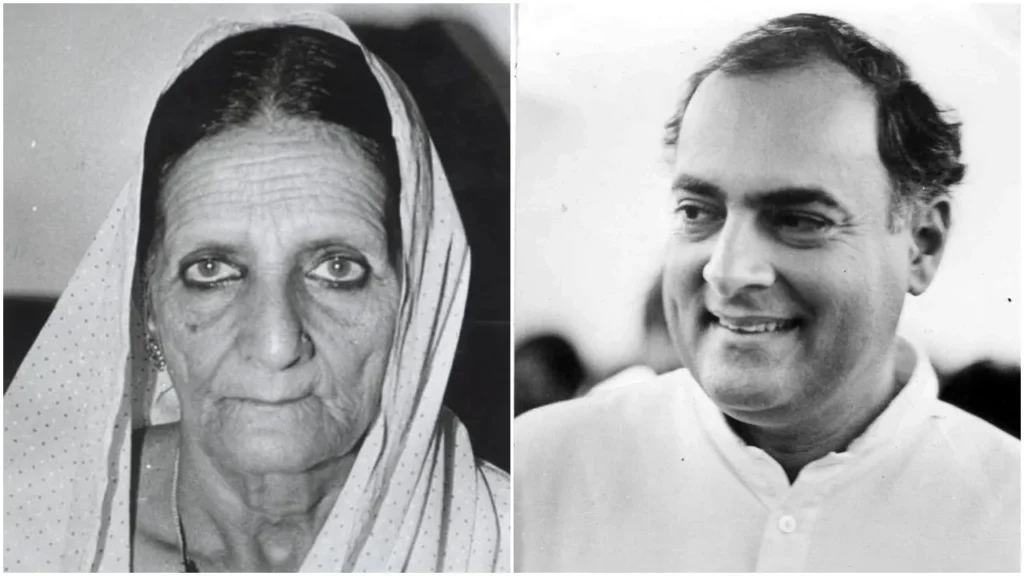
The tale relating to shah bano husband is one of the strongest legal and political debates in contemporary Indian history. What was initially started as a maintenance controversy between an elderly woman and her husband later turned out to be a national debate which touched on constitutional law, women rights, religion, legislation of divorce and politics.
The Shah Bano case is still being cited in the context of Uniform Civil Code, triple talaq reforms, gender equality and Muslim personal law even in 2026. The young audience is also reevaluating the narrative with the help of legal explainers, OTT discussions, documentaries, and political commentaries.
The fact that Shah Bano was not a political figure makes the case emotionally powerful. She was an old woman who had spent her decades as a homemaker, then was the focus of one of the greatest constitutional controversies in India.
Who was Shah Bano?
Shah Bano Begum was an Indian Muslim woman who had a case on maintenance that became one of the most historic Supreme Court cases in India. She was born in 1916 and married Mohd afterwards. Ahmed Khan, a well-endowed advocate based on the city of Indore in Madhya Pradesh.
Shah Bano did not stay in the limelight of attention most of her life. She was family oriented and she had five children. She went to the court, however, after having disagreements with her husband, on the part of marriage, and after having lost access to her financial resources because of the break-up of the marital life, she attempted to secure alimony through Section 125 of the Criminal Procedure Code.
Her legal fight was later to transform Indian discourse on:
- divorced women’s rights
- Muslim personal law
- constitutional equality
- maintenance laws
- political secularism
The 1985 case decided in her favor by the Supreme Court is one of the most talked of court cases in Indian history.
Quick Biography of Shah Bano
| Detail | Information |
| Full Name | Shah Bano Begum |
| Birth Year | 1916 |
| Birth Place | British India |
| Husband | Mohd. Ahmed Khan |
| Marriage Year | 1932 |
| Children | Five |
| Famous Court Case | Shah Bano Maintenance Case |
| Supreme Court Verdict | April 23, 1985 |
| Death | 1992 |
Who Was Shah Bano Husband?
The discussion around shah bano husband mainly focuses on Mohd. Ahmed Khan, a reputable and financially independent lawyer of Indore. He was supposed to be of a good social background and practised law with great success, many years. Early years of the marriage were very stable and the family had five children.
But this marriage is said to have changed when Khan married secondly, Halima Begum, who was related to the extended family. As time went by, stresses within the family grew which ultimately resulted into separation.
Years later, Mohd. The most famous Supreme Court case in which Ahmed Khan was in the limelight was when he opposed the claim of maintenance of Shah Bano.
Marriage Life Before the Legal Dispute
With a life of over 40 years together before the scandal went national news, Shah Bano and her husband had lived long before the scandal broke.
The family consisted of many members, and the couple got married in 1932. Shah Bano is said to have spent most of her life performing household chores and child rearing as her husband went back to his practice of law.
The relationship has been secret all through the years. Controversy with the rest of the world didn’t start until later in life there was serious family tension.
It has been reported throughout history that once the second marriage became part of the family structure, emotional distance and financial disagreements heightened.
By mid-1970s, the relationship had almost fallen apart.
The Turning Point That Changed Everything
The turning point of the big change came in 1975. Records relating to the case assert that Shah Bano had been petitioned out of the marital home after over 30 years of marriage. By this time, she had been very old and in need of funds.
At first, there was supposedly some maintenance support. The payments also ceased later on. Such a ruling later propelled Shah Bano to the courts.
What appeared to be a family feud turned out to be one of the largest constitutional debates in India.
Why Shah Bano Filed the Maintenance Case?
Later, in 1978, Shah Bano turned to the court within the frames of Section 125 of the Criminal Procedure Code (CrPC) under consideration.
This act is there to safeguard wives, children, and old parents who are unable to sustain themselves financially. The law aims at eliminating the issue of abandonment and economic distress.
Shah Bano claimed she needed money as she had spent the greater part of her life within the confines of marriage, and thus she needed to be supported financially since she did not have a source of income.
Her husband was very opposed to the maintenance request. Mohd. In the case of Ahmed Khan, he contended that his obligation to his wife ended at the end of iddat after a divorce under the Muslim personal law. That dispute of the law would eventually go to the Supreme Court.
Why the Shah Bano Case Became Historic?
Initially, most individuals thought that it will be a standard case of maintenance.
Rather, it was a constitutional debate since the Supreme Court had to determine whether the same protection granted to Muslim women under the criminal law was applicable to divorced women.
There were some big questions in the case:
- Could constitutional equality override personal law?
- Did divorced Muslim women deserve long-term maintenance?
- Should criminal law apply equally across religions?
- Could courts intervene in personal law matters?
These questions split the opinion of people throughout India.
Timeline of the Shah Bano Case
| Year | Event |
| 1916 | Shah Bano was born |
| 1932 | Married Mohd. Ahmed Khan |
| 1946 | Khan reportedly entered second marriage |
| 1975 | Shah Bano left marital home |
| 1978 | Maintenance case filed |
| 1979 | Magistrate granted maintenance |
| 1980 | High Court increased amount |
| 1985 | Supreme Court ruled in her favor |
| 1986 | Muslim Women Act passed |
| 1992 | Shah Bano passed away |
| 2017 | Triple talaq declared unconstitutional |
The Supreme Court Verdict of 1985
The Supreme Court gave its historic verdict April 23, 1985. The court decided in Shah Bano favor and affirmed that the clause 125 CrPC equated to all Indian citizens of whatever religion.
The ruling said that the women who have been divorced and are unable to support themselves should be accorded the protection of law and support of maintenance.
The decision was a significant social justice and constitutional win to women, as perceived by a number of legal thinkers. Nonetheless, the verdict provoked powerful political and religious responses as well.
Why the Judgment Created Nationwide Controversy?
The problem related to shah bano husband soon went outside the court.
Some conservative Muslim groups protested against the ruling and thought that the court meddled with the Muslim law of the land. Massive demonstrations cropped up in other areas of India.
Meanwhile, the verdict was greatly supported by women rights activists and progressive legal thinkers.
The nation was highly divided over:
- constitutional equality
- secularism
- religious freedom
- women’s financial rights
This made the case a national political issue.
Rajiv Gandhi Government and the Political Pressure
After the protest grew in intensity, the Rajiv Gandhi government soon came under tremendous political pressure. The religious groups insisted that the Muslim personal law should be given constitutional safeguarding. Political leaders were afraid of increasing polarization and unrest.
Then finally in 1986, the government enacted the Muslim Women (Protection of Rights on Divorce) Act.
There were critics that the act undermined the Supreme Court ruling. Proponents said that the law safeguarded religious identity and individual law practices. To this day, historians still debate the political ramifications of that decision.
Important Features of the 1986 Law
| Provision | Explanation |
| Iddat Maintenance | Husband mainly responsible during iddat |
| Financial Settlement | Fair provision discussed |
| Political Context | Passed after nationwide protests |
| Public Debate | Triggered criticism from legal experts |
| Long-Term Impact | Continued constitutional debate |
Rarely Discussed Facts About Shah Bano
The court verdict is only known to many readers. Nevertheless, various background information allows the story to be even more emotional.
Important Facts
- Shah Bano was around 69 during the Supreme Court verdict.
- The initial amount of maintenance was very minimal.
- Their marriage was over 40 years.
- After the verdict, she was said to have come under pressure.
- Later, the case affected the national politics and legal reforms.
These facts are the reason why this story resonates with the readers decades after it was written.
How the Case Influenced Triple Talaq Debates?
Similar debates were majorly involved in divorce among the Muslims in India again several years later.
In 2017, when the Supreme Court ruled that instant triple talaq was unconstitutional, many legal analysts likened this case to the Shah Bano case.
Both debates involved:
- women’s rights
- religious interpretation
- constitutional equality
- political pressure
- legal reform
Due to this relationship, the Shah Bano case was once again in national debate.
Why Younger Audiences Are Searching Shah Bano Again in 2026?
It is no coincidence that the renewed attention surrounding shah bano husband is taking place in 2026. There are a number of justifications as to why the story is being researched by younger audiences:
Reasons Behind Renewed Interest
- Debates over Uniform Civil Codes.
- OTT and documentary discourses.
- social media clarifiers of law.
- constitutional law discussions
- women’s rights movements
- historical political analysis
The case is not seen simply as a religious controversy, but more so by modern audiences. It is regarded by many as one of the first big gender justice struggles in India.
Emotional Reality Behind the Headlines
Numerous articles address solely the legal aspect of the debate. But behind all the constitutional arguments lay an old woman struggling to be dignified after decades of a married life.
When the case got to the Supreme Court, Shah Bano was aged, economically reliant, and emotionally drained out of years of struggle. It is that human struggle that makes the story continue to feel so potent in 2026.
Public Opinion Then vs Now
Practices in 1980s were far apart as compared to 2014. The argument at that time is more about religion and political identity. Big demonstrations and political talks took center stage in the national discourse.
The emphasis shifted in 2026 more towards the following:
- gender equality
- constitutional rights
- maintenance protection
- legal reform
- women’s dignity
This transformation is why the case is being seen differently in the younger generations than it was in other generations.
Shah Bano’s Final Years
Shah Bano slowly dodged the limelight following the controversy. She passed away in 1992. Although her case affected the whole nation in a huge way, it was observed at the time that her death got comparatively low publicity.
Nevertheless, her judicial battle forever became part of Indian constitutional history. Her name in the twenty first century is still synonymous with the rights of women, the maintenance law and constitutional reviews.
Conclusion
Shah bano husband still keeps on rising as one of the crucial legal and political annals in the modern Indian history. What began as a maintenance tussle between Shah Bano Begum and Mohd. This controversy over constitutional equality, women and rights, religion, and political power eventually turned into a national debate when Ahmed Khan was involved.
In 2026, the Shah Bano case still makes a ripple effect on the debate regarding Uniform Civil Code, triple talaq reforms, secularism, and gender justice. The case still retains its relevance as it was much more than just a divorce case. The legal arguments had a backdrop of an old woman who was struggling to get her dignity and financial stability at the end of decades of marriage.
That emotional and constitutional legacy is still alive and well and that the Shah Bano case can still be called one of the most debated legal cases in Indian history.
Also Read About :- Shreya Priyam Roy Wikipedia 2026